Thursday, November 6, 2008
Earth Compared to Other Planets
Since Earth has an atmosphere it does lots of things to protect us. One thing it does is keep big meteors from hitting the surface. The mososphere is the layer of the atmosphere that protects us from large meteors, because meteors burn up there. On other planets without atmospheres, meteors just hit the planet and create craters. The stratosphere protects us from ultra violet rays from the sun. The ozone layer is what protects us. On other planets rays shine directly onto the planets surface causing extreme temperatures. The atmosphere also keeps heat out and traps other heat in. On planets without atmospheres, sun rays only heat the lit side of the planet. The atmosphere also creates weather. Weather occurs in the troposphere. On other planets without atmospheres, weather can't occur, because clouds aren't present.

Wednesday, November 5, 2008
London Type Smog
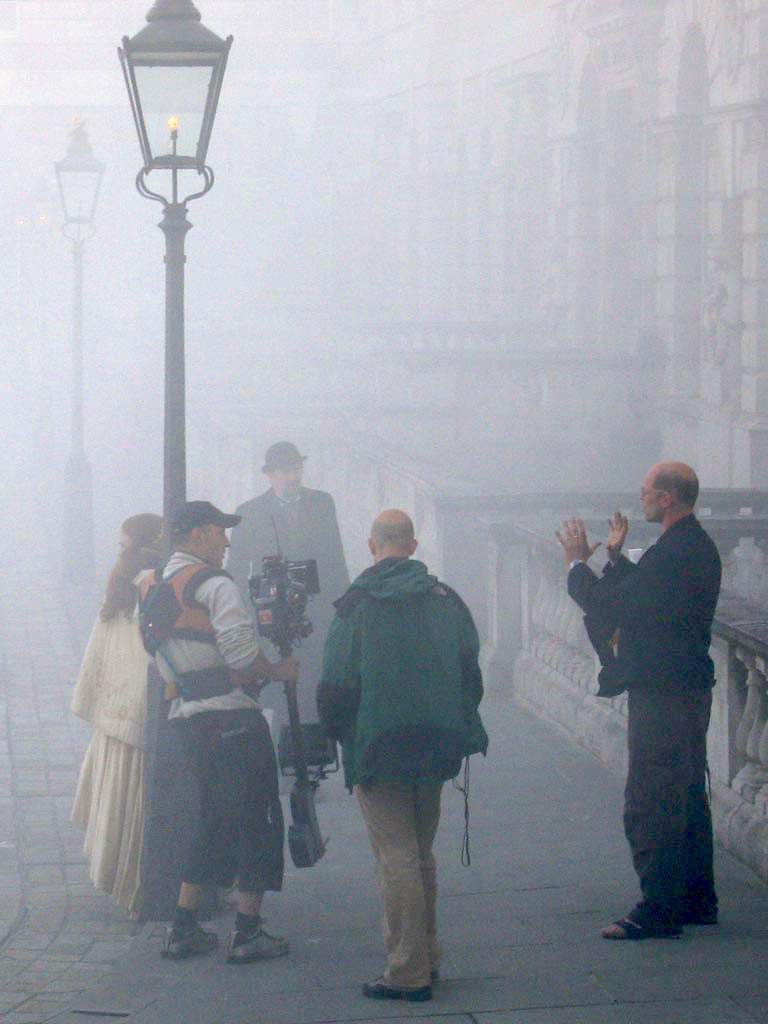
London type smog is the polluted air that once surrounded London about 100 years ago. The cause of this smog was the burning of coal. The particles in the smoke from the burning coal mixed with the moisture in the air and created "smog". The consequences of the smog were that the air was very black and people were getting sick from inhaling it. The main thing that people did and still do today is stop burning so much coal or not burn any at all.
Wednesday, October 8, 2008

Monday, September 29, 2008
Monday, September 22, 2008
Friday, September 19, 2008
Gizmo Seasons
The main factor that causes seasons is Earth's tilt. When the Earth is tilted away from the sun, the Southern Hemisphere receives the most direct sunlight, and is in summer. When the Earth is tilted towards the sun, the Northern Hemisphere receives the most sunlight, and is in summer. Another factor that causes seasons is earth's revolution. When the earth revolves, the hemispheres are facing the sun in different ways. For example, when its summer in Colorado, the Northern Hemishere is recieving the most direct sunlight, because at that point, the north is tilted toward the sun.
Monday, September 15, 2008
Zoom Perspective
The book Zoom took a "picture" of a SMALL part of the world and kept zooming out from it until it got to outer space. Every time you turn the page, you could guess or infer what you were looking at. This is related to perspective, because you can have a different view or idea on what you are looking at (a.k.a. the page). Everyone has a different view or prospective on what the page is showing.
Sometimes, I think I am viewing or seeing something correctly, but it turns out I have a bad prospective on it. If I get a different prospective on the subject, I can sometimes change my mind. Mindset, where I'm standing, and previous occurrences can all change my prospective on things.
In science anyone can be interested in my gathered data. For example, scientist could use my data for further research, or other people could use my data to make their own ideas. Scientists would probably be more interested in close-up data, where as to other people just want the overall view of things. When we study astronomy, prospective is very important, because depending on where and when you are, your prospective will change, because things in space are constantly moving.
Sometimes, I think I am viewing or seeing something correctly, but it turns out I have a bad prospective on it. If I get a different prospective on the subject, I can sometimes change my mind. Mindset, where I'm standing, and previous occurrences can all change my prospective on things.
In science anyone can be interested in my gathered data. For example, scientist could use my data for further research, or other people could use my data to make their own ideas. Scientists would probably be more interested in close-up data, where as to other people just want the overall view of things. When we study astronomy, prospective is very important, because depending on where and when you are, your prospective will change, because things in space are constantly moving.
Subscribe to:
Posts (Atom)